Salixspp.
When most the great unwashed mean of a willow tree , a vivid image of grace and elegance often do to creative thinker .
The willow is renowned for its distinct feature that evoke a sense of enchantment and tranquility .
We link to vendors to help you discover relevant product . If you buy from one of our link , we may earn a direction .
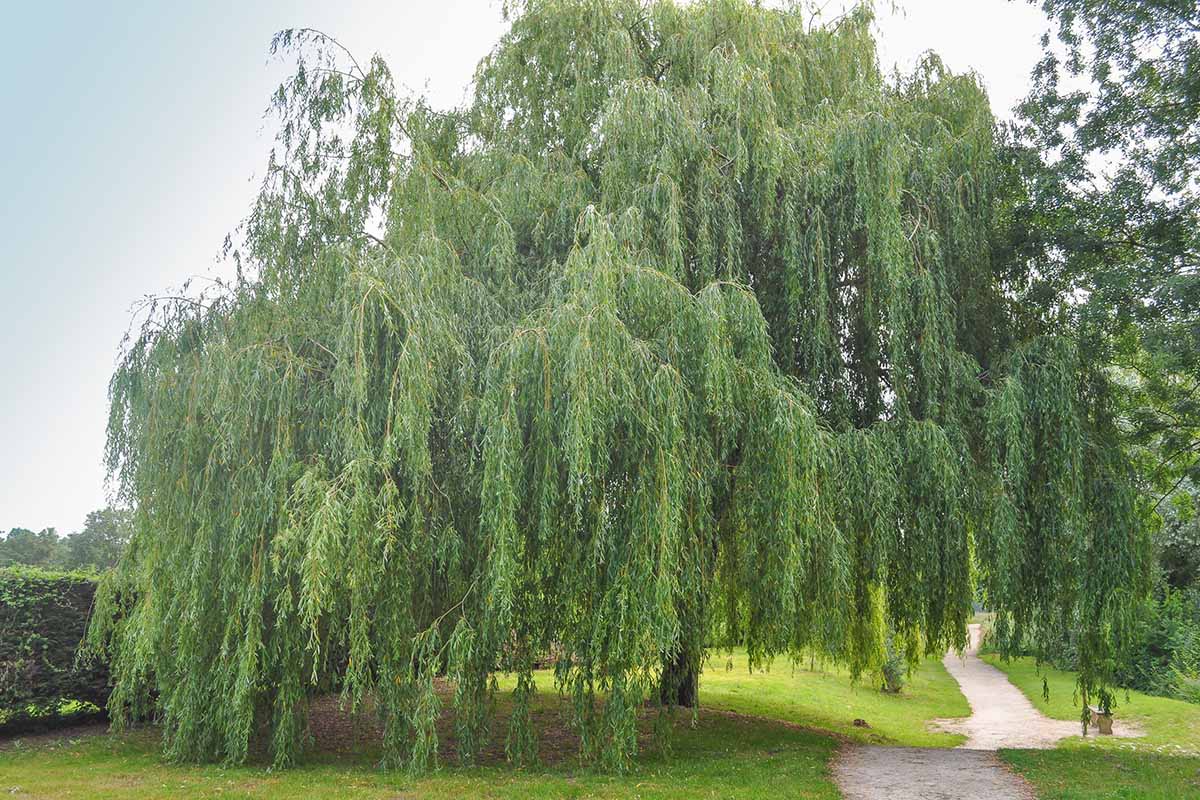
Salix alba.
Salixis a genus of shrub and trees belong to the willow family , Salicaceae . Growing in an teemingness of shapes and size , it includes some 400 specie worldwide .
Willows are a sight to behold with their refined swaying in the wind , lush leaf , and mysterious roots that join to the earth .
Mostly aboriginal to cold and temperate areas , these tree diagram are evaluate for ornamental , blending , timber , practice of medicine , and erosion control needs .

As you continue to register below , search our comprehensive scout to growing and foster these enamor tree diagram , you will unveil the secrets of willow cultivation .
Here is what to expect next :
What You’ll Learn
Cultivation and History
A group that include many different specie , willow trees can be found throughout the domain .
The ancient Egyptians were among the first to recognize the medicinal property of the weeping willow ( S. babylonica ) .
It may surprise you , but willow bark has a history of being used in traditional music for more than 3,500 years . The bark and leave contain a chemical compound known as salicin .

Although unknown to the Sumerians and Egyptians who used willow for its analgesic and anti - inflammatory effects in their meter , the natural chemical compound salicin break in 1828 would be used as the precursor of aspirin in 1897 .
Scientific evidence for using willow to relieve pain and as a fever reducing agent first surfaced in 1862 .
In 1862 , an American dealer named Edwin Smith in Cairo buy some ancient curl go steady back to around 1500 BCE .

These scrolls are known as the Edwin Smith Surgical Papyrus and the Ebers Papyrus and within these scrolls was the first written phonograph record of the enjoyment ofSalixin do by pain .
The rich herbal cognition of willow transcended the raise and gloam of empire and was revived in ancient Greece .
Willow was recommended by Hippocrates to relieve the pain of childbirth .

This recommendation persisted beyond the clip of Hippocrates and persist in to be utilized during the Roman earned run average as well . record by Pliny the sr. , clean willow tree ( S. alba ) was mentioned as one of the oldest painkiller in human story .
Chinese physicians have been using livid willow tree since 500 BCE to lour fevers and relieve pain .
Alongside Assyrians , Egyptians , and Greeks , Native American tribes , including the Cherokee , Blackfoot , Iroquois , and Inuit people , used it for various complaint , let in rheumatoid arthritis and ecumenical pain .

In the mid-1700s , ashen willow was used in Britain as a redress for malaria .
Willow would go on to be bring up in dissimilar writings throughout time , with document use in treating various ailments .
Along with its medicative properties , the wood has been used for make paint brush , fishing nets , traps , fences , whistles , furniture , broom , basketry , and so much more .

Willow Tree Propagation
The propagation techniques that I will get over below are those readily usable to home nurseryman .
If you are considering grafting , consult with experient grafters , horticulturists , or tree surgeon with experience in graft these Tree specifically .
They can guide you in pick out appropriate rootstocks and right grafting technique to be successful .

As a side note , If you are anything like me , a spontaneous experimenter , you’re able to always be a little hardheaded , plunk in headlong , and Bob Hope and wish everything go well .
If you look at life from my point of view , having a list of betray try could season you into becoming a skipper nurseryman ! Like me , you will discover from what not to do first .
If you are not like me and want to check the right execution of the grafting mental process on your first try , always commemorate that service is not far away .

Reach out to a local extension overlord nurseryman in your sphere .
Now , let ’s get to it :
From Seed
willow tree produce seeds that can be used for propagation . You will see that most people like to propagate these trees via cuttings , but that does n’t stand for cum multiplication ca n’t be done .
The seeds are very flossy and light , which cause it comfortable for them to be distributed by the nothingness . But being so light makes it harder for them to be collected , since there are no nuts or big berries to pull from a tree diagram for easy access code .
contrive to collect seeds in late May or June , before they have all blown off .

Vacuum cleaner have been used at times for this very summons . I ca n’t help oneself but wonder about the first person who had that sudden faint bulb pop over their foreland with this idea .
Alternatively , if the vacuum process is a bit weird for you , like it is for me , around the same sentence in May or June , you could acquire a humble branch or two and secrete the seeds yourself .
It ’s of import to note that while the world-wide ejaculate - sowing cognitive operation remain similar across different species , there can be variations in the specific essential and gadget characteristic of each variety .

Let ’s use pussy willow ( S. discolor ) for our example . It is well-heeled to grow this plant from semen by collecting seed from the catkins , and you will do this when they look to be the most cottony .
Indoors , fill pocket-sized containers or a seed - set off tray with potting mix and immediately sow the seed on the airfoil of the land with the silklike seed hairs still attached .
Keep the soil in the container evenly moist until the seeds have burgeon forth .

After germination , place the container in a sunny localization and continue to furnish even moisture for the seedling as they grow .
Once these seedlings have reached a tallness of six to 12 column inch and have several sets of well - developed leave-taking and launch healthy antecedent systems , they are ready to be transplanted into your landscape .
The exact timing for transplantation depends on the maturation rate of your specific multifariousness .

SomeSalixspecies may have specific seed sleeping requirements or show lower germination rates than other variety . Some exemplar may include the need for frigid social stratification or round-eyed soaking in water .
Research the particular germination requirements for the species you mean to farm . check also to check the specifics for sunlight , wet levels , soil case , and other environmental preferences .
From Cuttings
Almost all willow will settle from clipping . you may take impertinent cuttings during spring or early summer as well as abeyant cutting in the winter .
For inactive newspaper clipping you could hit it up them in water for 24 to 48 hours or use a steady down hormone solution to induce root development .
While both carving have potential to grow , bracing cuttings will broadly have a high achiever rate than sleeping ones .

Willow trees are generally some of the easiest plant to rout . The hormone they bear encourages this speedy rooting cognitive operation . It is so rapid that other plant can gain from a rooting solution made by boiling willow tree stems in water .
commemorate this when thinking of develop other plants . I ’ll happily accept your thank - yous with plant oblation when you have too many successful flora on your hand !
Take a cutting 12 to 18 inches farsighted about 1/2 inch in diameter from a terminal branch .

You will then place the cutting into a 14- to 16 - inch well - draining container filled with moist potting soil . you may also root your clipping straight into your garden soil .
cutting can be settle in H2O as another alternative . Change the pee on a regular basis , and after you observe a developed root system , you may take away the cut from the water and flora outside or in a container .
From Seedlings/Transplanting
By far the gentle fashion to get jump is to buy a specimen from a garden nitty-gritty or plant nursery .
Willow tree can be transplant successfully under the right consideration and with proper care .
It is best to transpose while they are sleeping , in late fall to early springtime . prefer a localization that provides suitable precondition for the species you are grow .

willow generally choose full sun but can stand fond shadowiness . The soil they typically thrive in is damp and well - draining , but they can accommodate to various soil type .
insure that the Sir Herbert Beerbohm Tree has enough distance to grow to its full size .
For larger mintage you will involve an approximate spacing of 20 to 30 foot from other plants and structure , but if you are transfer a small species or a shrub - like variety , you could reduce the spatial arrangement accordingly .

When planting a purchased specimen in a nursery pot , I like to remove the plant from its container and rinse off the potting grunge from the roots . If the plant appear ancestor bound , I prune out any circling root word or those going in different directions .
Washing off soil provides the chance to appraise the wellness and term of the root , and prevents the transportation of diseases and pests that could be present in container stain .
However , many nurseryman favor to skip this cognitive operation and set their transplants directly into the flat coat .

It is beneficial to transfer into native soil unless it is very poor , and if necessary , you could amend the stain with compost for a boost of nutrient .
If you have purchased a stark radical tree diagram , you ’ll need to overcharge the roots in a pail of water for six to 12 hours before implant .
Loosen and work the grunge to a profoundness that is doubly as deep as the length of the root system , and doubly as full as the spread of the roots .

Gently lower the tree into the muddle , and backfill with filth .
You will want to push the soil in and around the roots and water in well .
Water your transplantation deeply once or twice a week , depending on the weather and soil conditions . Willows love moist soil but not grime that is waterlogged .

These transplants or untried plant may require protection from cold-blooded weather , specially if planted later in the originate time of year .
you may protect them using constitutive mulch such as wood chip , bark around the base , or utilise burlap coverings to shield from the cold or drying steer .
Along with moderating grunge temperature , mulch also facilitate to retain moisture and suppress gage growth .

How to Grow Willow Trees
count on the variety of willow tree ’s personal motivation , some require different mature weather condition .
As a general linguistic rule , mostSalixspecies can stomach loamy , alkaline , clay , or sandlike soils . However , they typically prefer moist , well - draining soil that are slightly acidic .
If you have excessively alkaline soil , adding sulphur to the grunge can help make it more acidic .

Willows can grow in a ph reach of 5.5 to 8.5 , but the idealistic range of mountains for most specie is 5.5 to 6.5 .
They generally ask at least four hours of direct sunlight to thrive , although at least six to eight hours day by day is recommended for the skillful outcome .
When you ’re take a location , you need to keep in creative thinker that some mintage , such asS. babylonicahave belligerent water - essay roots , so you want to avoid implant those near home , septic systems , patios , drive , sideways , or waterlines .
This characteristic is advantageous when they are raise near physical structure of water , but it can be problematic when found near underground structures or public utility .
While searching for water , if they encounter washy points and cracks in the founding of dwelling , the roots may penetrate and exacerbate structural issues , infected system components , and waterlines .
This can lead to blockages , leaks , bursts , body of water supply issue , or damage to the system , requiring costly repairs . As the base grow and expand , they can go up or break the surfaces of patios , driveway , and sidewalks , creating hazard and requiring expensive repairs .
These tree have a eminent water requirement , peculiarly during their initial establishment stage and they should be supply with aboutone column inch of water per week , including rainfall .
This is specially important for the first twelvemonth follow planting .
Once lay down , they are relatively drought large-minded . Deep watering every one to two workweek is unremarkably sufficient , depending on rainfall .
It is important to mark that specific fertilizer requirements for willow trees can vary calculate on the soil quality and overall health of the tree .
Newly planted trees may benefit from an initial program of fertilizer to stand their governing body and former growth , but for established specimen , fertiliser is only necessary if you see yellowing or wan leafage and/or a slow growth rate .
So , if you notice these signs , your willow tree can benefit from some plant food . willow tree generally react well to balanced fertilizers such as 10 - 10 - 10 ( NPK ) .
It is best to fertilize in other spring before the active growing time of year . You want to avoid impregnation in the late growing time of year , as it promote newfangled growth susceptible to winter impairment .
Growing Tips
Pruning and Maintenance
Different species and cultivar may require specific pruning proficiency base on their growth habits and the desired event . ensure to crack the pruning requirements for your particular variety .
Overall , it is best to set out the pruning procedure when trees are younger and easier to crop with . You desire to void pregnant pruning changes when the tree is older and substantial in its structure .
you could cause willow trees to bleed sap if they are pruned at the improper time . It is good to prune in the wintertime while the Sir Herbert Beerbohm Tree is dormant , to keep this to a minimum .
Make certain to usehand prunersfor small root word and twig . It is best to use long - handled lopper for prominent stems up to one and a one-half inches ( four centimeters ) in diameter .
They are effective tool that make it potential to create clean cuts when leverage is need . For anything larger , have a saw W. C. Handy .
When pruning a young specimen , aim to remove weak branches and those that are broken , overcrowded , or growing too close together .
This serve to reduce the endangerment of disease problems and allow tree to heal faster . Weak branches will in all probability break when they become grave .
While mould your tree , you need to make cuts where a offshoot attach to the body . If you need to shorten the offshoot , always abbreviate before a leaf bud or sprig ; this encourages new increase . Be certain to transfer any discredited or upset offshoot .
remove subdivision from the bottom part of the trunk is recommended when the tree trunk reaches a diameter of two column inch .
This uncouth pruning practice is “ limbing up ” or “ raising the crown . ” This process conjure the height of the canopy .
Removing the abject branches creates a headway beneath the tree , which is good if you want to mow , walk , or make a quad for other industrial plant or structures underneath .
Limbing up provides optical appeal by creating an unresolved and well - defined trunk , which is suitable in some garden and landscape gardening designs .
Pruning improves air flow and light penetration within the Sir Herbert Beerbohm Tree ’s canopy , and this help with boil down the likelihood of fungal diseases .
Remove any branch that are raise up or else of out . This prevents breakage as the branch becomes lumbering and the tree grows .
In general , fledged specimen require no specific overwintering process . In the winter they naturally go through a dormant period , where they fall back their leaves .
During this metre , their energy is focused on the root and main root word , which remains alive but dormant .
go on the mature works well - watered until late surrender and until the ground freezes hard is recommended . This ensures that it has sufficient wet in its ascendant system before dormancy .
Willow Tree Varieties to Select
There are many species and cultivar to choose from when growing a willow tree . Although I can not heel them all , here are a few of the most common species in cultivation :
Corkscrew
favor for mysterious yet endearing torture branches , S. babylonicavar.matsudana(syn . S. matsudana , S. babylonicavar.pekinensis ) is aboriginal to northeastern China and get in USDA Hardiness Zones 4 to 9 .
It can maturate up to 50 feet tall in full sun locations . This species will apprise a part shade location in hot and desiccated region .
This species stands out for its visually challenging and unique physical body .
It features twisted , wring branches that add texture and architectural ingathering to the landscape painting even when devoid of leaves .
The cultivar ‘ Tortuosa , ’ commonly known as dragon ’s nipper , run around an upright growth habit , reaching a mature height of 20 to 30 feet and a spread of 10 to 15 feet .
‘ Tortuosa ’
Nature Hills Nursery carriesthree- to four- and four - to - five - foot - tall plants in # 3 container .
Peachleaf
With leaves that resemble those ofpeach tree , S. amygdaloidesis aboriginal to various region of North America and southern Canada and grows in USDA Hardiness zone 3 to 5 .
It come upon heights of up to 40 feet and enjoy full sun to fond refinement .
It is well placeable by its drooping twig , yellowish branchlet , and green leave that are silvery livid underneath and shimmer in a slight breeze .
This tree is typically a riverside species that is find near swampland , creek , lakes , swamp , and edges of wetlands .
Pussy Willow
favor for its cosmetic use , S. discoloris the perfect addition to your garden . They are sleep together for their welcome blooms in the springtime , making them a top pick for many nurseryman .
Used for decorations during the lunar raw class , it is think to bring prosperity for that follow year . It is a popular pick amongst those who also expend it for easter decorations .
S. discolorprefers full Lord’s Day and can grow up to approximately 25 groundwork tall and wide of the mark . It is native to North America and grows in USDA Hardiness Zones 4 to 8 .
Nature Hills Nursery carriesone- to three - foot - tallS. discolortrees .
Weeping
aboriginal to northern China , S. babylonicatrees are well - know for their weeping habit . This metal money grows well on the edge of pool and lake .
The branches carry in the picnic , though stronger winds may kick downstairs off stems and litter the terra firma . Plan to supplant tears willows in about 30 years as they are dead - lived .
Weeping Willow
They get in USDA Hardiness Zones 6 to 9 , reaching heights of up to 50 feet , and they prefer full Sunday .
you could findS. babylonicaavailable at Nature Hills Nurseryin # 3 container .
Find more tip on growing weeping willows here .
White Willow
S. albais known for its medicinal bark and is extremely large and fast - raise .
It is not the good tree for most landscaping situation because of its mammoth size and aggressive root system . It is sometimes used to fill low wet spot .
aboriginal to westerly and primal Asia and Europe , S. albagrows in USDA Hardiness Zones 4 to 9 .
It prefer full sun to part shade and can pass height of up to 100 feet .
Managing Pests and Disease
Like many other plants , willow Tree can be susceptible to pests and disease . And like many gardeners , you may require to protect your precious tree diagram from harm !
Here are some pests and disease to look out for :
Herbivores
Whether they have cotton fiber - like backside and pinch olfactory organ or a proud stature and mesmerizing pose , they can still do harm to your willow tree diagram .
These cunning little pest will hoppity - record hop to erode on the stem and barque of unseasoned specimen and run through young shoot and bud of shew trees .
Their eating can lead in bark stripping , girdling , or sever prow sections .
This can hinder the catamenia of food and water , compromising the health and even lead to the death of young or fresh planted trees .
remove large amounts of foliage can trammel the tree ’s ability to photosynthesize and grow energy , stunting the tree ’s development .
The constant tampering with your tree can cause wounds or injuries and create entranceway points for disease - do pathogens and other blighter .
Some protective measurement let in fence with mesh , implement commercial-grade or homemade repellent with strong odors or tastes that hare find unpleasant , removing or minimizing hare - friendly habitats like dense brush oodles , and humane traps .
teach to keep rabbits out of your garden in our usher .
When nutrient sources are limited , deer are possibly coming for your willow . in particular during wintertime , they may strip the barque from the low trunk and branches .
This can expose the Sir Herbert Beerbohm Tree to diseases and pests , and cause girdle . Like our previously cite hopping buddies , their feeding can disrupt the flow of nutrients and water between the roots and the canopy .
During the rutting time of year , males scratch their antlers against trees to tick their territory and tone their neck muscleman . This can result in barque equipment casualty , combat injury , and break of offset .
Some preventive measures that can be require includeinstalling marvelous , sturdy fencing , applying commercial and handmade deterrent , choosing cervid - resistant varieties such asS. integraandS. matsudana , and creating a less inviting environment .
Learn more about how to manage deer in our guide .
Insects
get ’s take a face at some insect pests that are drawn to willow trees and how to manage an infestation .
These soft - bodied vampire - like insects will fall off in their fangs – or pierce - take in mouthparts – to course on the blood , I intend , plant sap of your willow tree .
They unremarkably collect in colonies under the tender terminal growth in the spring . Leaves that are intemperately infested can wilt , sprain jaundiced , and mature untimely because of excess sap remotion .
While the plant may look bad , they generally will not cause any severe harm to established tree . You may noticesooty moldas well , a fungous contagion that can indicate an aphid infestation .
Read more about dealing with aphid infestation in our guide .
Cottonwood leafage beetle ( Chrysomela scripta ) are gadfly that feed on willow both as adults and as larvae .
The larvae will skeletonize the leaves while the grownup give along the vein and the midvein . They are truly a powerhouse tag - team .
They produce multiple generations throughout the year , with legal injury occurring throughout the entire growing time of year . What a headache !
The larvae can tunnel around the crown and theme of the Sir Herbert Beerbohm Tree , which can damage untried plants .
While the larvae themselves wo n’t kill matured specimens , this can make them susceptible to wind strikes if they ’ve compromise a tree ’s structure . They feed on leaves , shoot , and tender bark and can cause spotted tree harm .
Since these pests have few raw predatory animal , many nurseryman lend oneself insecticidal soaps that can help control the larvae , such as those incorporate permethrin . This can preclude the adults from laying egg and avail to control the larva .
Fall webworms ( Hyphantria cunea)are caterpillar - like insect that will feed on many tree and shrub , include your precious willow .
You will see their first contemporaries active in May and their 2d in July .
They spend the winter pupating in the soil , await to feed on their host tree diagram . They damage the tree diagram ’s appearance but this wo n’t usually touch on the tree diagram ’s health .
Now , that ’s practiced news !
Small figure can be physically removed from plants if you ’re able to reach and kindly localise into a bucket of soapy water supply .
Or you may crush them on the plant if the variety method acting is too tolerant for you . Some even practice a gamy - pressure water sprayer to knock them off .
modest - wallop pesticides such as insecticidal goop and horticultural oil are effective when deal with small telephone number . Other pesticides that can be used are azadirachtin neem Sir Herbert Beerbohm Tree extract , and spinosad , which is derive from a stain bacterium .
Oystershell scale(Lepidosaphes ulmi ) gadfly commonly infest willow .
backbreaking plague can cause reduced vigor as the scale insects suck body of water and nutrients from the tree . They are powerful enough to pour down limbs and sometimes entire trees in large telephone number .
They are said to go through two generations of little terror throughout the year . Lucky for us , lifelike enemy avail to adequately keep down populations .
Scale can be physically remove from offshoot and staunch with a plastic knockout scrubber if you find them . strain not to damage the thin barque on the trees . Many gardener employ horticultural oil or other type of insecticides .
Note that chemical insecticides are only effective against these plague in the crawler point .
Several dissimilar mite species causegalls on willow treesthrough their salivary secretions .
Galls may also be cause by mite excretions , secretions from developing larvae , or mite front in or on plant tissue .
Some species include the catkin gall mite(Aculus tetanothrix ) , rust mite ( Aculops salix ) , and bud rancour soupcon ( Aculops minimus ) .
You need to cut off any infected sphere to get free of the galls . Wherever you see any blistering of the leave-taking or excessive growth of hairs , that ’s a sign of mite .
Lady microbe can be used to fertilize on these soupcon , and they will get rid of them chop-chop . All hail , ladybug ! It is an special incentive that ladybugs do n’t harm your plants .
Some other options are dormant spray oil , green lacewing fly , and insecticidal soap .
Disease
Let ’s take a looking at some of the common diseases that can chevy willow trees . As if these trees did n’t have enough marauder to look at with already . What a toll to be so endearing …
smuggled canker is caused byGlomerella miyabeana . This fungus make lesion on the parting that will lead to defoliation and as the pathogen spreads , will cause cankers to form in between the branches and twigs .
Pruning away any septic leaves , twigs , and branches is lively to treat this disease . Although you ca n’t heal be cankers with fungicide , you could prevent reinfections .
Many use Chlorothalonil fungicide to hold in further spread , but coating must be timed properly .
This disease commonly sham willow trees . It is triggered by a bacterium calledAgrobacterium tumefaciens , which creates saddle sore - like tumour on the Sir Herbert Beerbohm Tree ’s ascendant or bark .
There is sadly no cure for crown insolence , but if you follow right direction practices , your willow tree can live . Copper - based fungicides can slow down disease procession .
Quick Reference Growing Guide
Sow and Grow, Fellow Willow
And there you have it , fellow Sir Herbert Beerbohm Tree enthusiast ! We ’ve reached the end of this impulsive willow tree tree adventure .
Now armed with proficiency , tips , and the unmixed excitement of grow your own willow tree diagram , it ’s time to roll up those sleeves , snap up your horticulture tools , and let the magic unfold ! May your willow tree diagram grow warm !
We would love to listen about your willow Sir Herbert Beerbohm Tree spring up journey . Feel complimentary to partake your experience with us in the comment division below .
If you are interested inlearning more about other landscape treesthat you could grow at home , check out these articles next :
© Ask the Experts , LLC . ALL RIGHTS RESERVED.See our TOSfor more details . mathematical product photos via Nature Hills Nursery . Uncredited photos : Shutterstock .
About
Alonza Simmons
